
The rising global interest in natural sweeteners has positioned stevia rebaudiana as a remarkable opportunity for agricultural producers seeking to diversify their operations and tap into lucrative markets. As consumers increasingly turn away from refined sugars and synthetic alternatives, the demand for this unassuming perennial herb has surged dramatically. Cultivating stevia presents both exciting prospects and specific challenges that require careful attention to detail, from initial soil preparation through to final harvest. This comprehensive guide explores the essential techniques and strategies that can help growers establish thriving stevia operations whilst maximising both crop quality and financial returns in an increasingly competitive marketplace.
Understanding stevia: from seed selection to planting preparation
Choosing the Right Stevia Varieties for Commercial Success
Selecting the appropriate cultivar represents one of the most critical decisions facing prospective stevia producers. The sweetness profile, leaf yield, and adaptability to local conditions vary considerably between different varieties of stevia rebaudiana, making cultivar selection a fundamental element of successful agricultural production. Growers must consider not only the potential sweetness concentration but also factors such as disease resistance, growth habit, and harvest timing when evaluating which variety will perform best within their specific climate and soil conditions. Commercial success hinges upon choosing cultivars that align with market demand for natural sweetener products whilst demonstrating reliable performance under local growing conditions. Research into available varieties and consultation with agricultural extension services can provide valuable insights into which selections have proven successful in similar environments. The propagation methods employed also influence crop establishment, with stem cuttings emerging as the preferred technique for maintaining genetic consistency and ensuring uniformity across plantings. This approach allows producers to replicate the desirable characteristics of proven parent plants, creating more predictable outcomes and streamlined management practices throughout the growing season.
Preparing Your Soil and Growing Environment for Optimal Yields
The foundation of productive stevia cultivation rests firmly upon proper soil preparation and environmental conditions. Sandy loam soil with excellent drainage characteristics creates the ideal growing medium, as stevia plants demonstrate pronounced sensitivity to waterlogged conditions that can quickly lead to root complications. Testing and adjusting pH levels to maintain readings between six and a half and seven and a half ensures that essential nutrients remain accessible to developing plants. Prior to planting, incorporating substantial quantities of farmyard manure or well-decomposed compost enriches the soil structure whilst providing a steady release of nutrients throughout the establishment phase. Many successful growers also blend neem cake into their soil preparations, adding approximately forty kilogrammes per acre to support healthy root development and provide natural pest deterrence. The physical layout of growing areas deserves equal consideration, with raised beds offering distinct advantages in regions where drainage concerns exist. These elevated planting areas prevent water accumulation around sensitive root zones whilst improving soil warming during cooler periods. Adequate planting spacing, typically forty-five centimetres between plants in all directions, allows for proper air circulation and reduces competition for resources. This arrangement accommodates roughly forty thousand plants per acre, striking a balance between density and individual plant performance. Climate conditions also play a decisive role, with stevia thriving in warm, humid environments where temperatures consistently range between twenty and thirty degrees Celsius. Ensuring that planting sites receive full sun exposure for six to eight hours daily promotes vigorous growth and enhances the development of the sweet glycosides that give stevia its commercial value.
Cultivation techniques: growing healthy stevia plants throughout the season
Watering, feeding, and maintaining ideal growing conditions
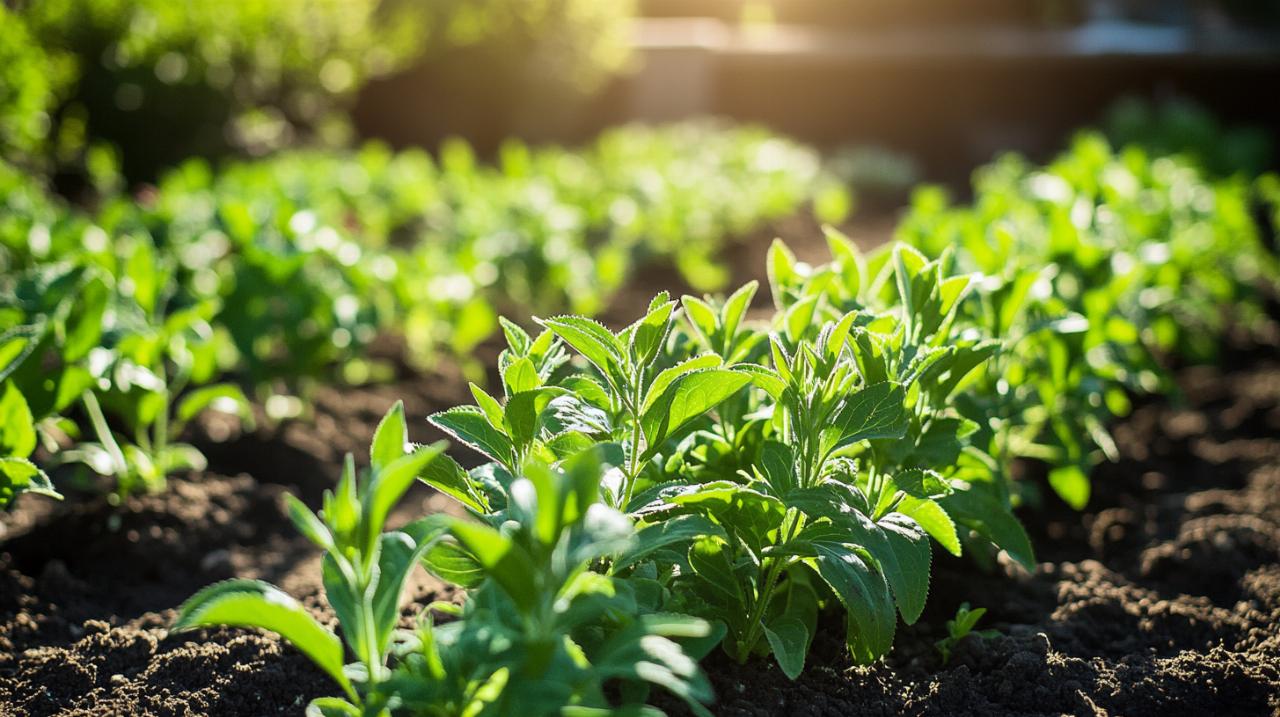
Maintaining optimal growing conditions throughout the season requires attentive management of water and nutrients. Irrigation practices must strike a delicate balance, providing sufficient moisture to support growth without creating the soggy conditions that invite root rot and other moisture-related problems. Light, consistent watering proves far more beneficial than infrequent heavy applications, encouraging robust root systems that efficiently access available nutrients. As plants progress through their growth cycle, their nutritional requirements shift accordingly, demanding a strategic approach to fertilisation. During the vegetative growth phase occurring thirty to forty days after establishment, applying twenty-five kilogrammes of nitrogen alongside twenty kilogrammes each of phosphorus and potassium per acre supports vigorous leaf development. Following each harvest cycle, replenishing soil nutrients with twenty kilogrammes of nitrogen and fifteen kilogrammes each of phosphorus and potassium maintains plant vigour and prepares the crop for subsequent production periods. Beyond these primary nutrients, crop nutrition benefits significantly from foliar spray applications of micronutrients including zinc, iron, and magnesium administered monthly. These supplemental treatments address potential deficiencies that might otherwise limit yield optimisation and quality development. Regular monitoring of plant appearance and growth patterns provides early warning of nutritional imbalances or environmental stresses, allowing for timely corrective interventions. Weed management deserves particular attention, as competing vegetation rapidly depletes soil resources and harbours pests that may migrate onto crop plants. Maintaining clean growing areas through regular cultivation or appropriate mulching preserves resources for the stevia crop whilst reducing habitat for problematic insects and pathogens.
Pest management and disease prevention strategies
Protecting stevia crops from pests and diseases requires vigilant monitoring combined with prompt, appropriate responses when problems emerge. Aphids frequently appear on tender growing tips, extracting plant sap and potentially transmitting viral diseases between plants. Organic pest control measures using neem oil diluted at five millilitres per litre of water effectively suppress aphid populations whilst remaining compatible with natural production systems. Encouraging beneficial insects such as ladybird beetles provides biological control that can sustainably manage pest pressure without chemical inputs. Whiteflies present similar challenges, though yellow sticky traps deployed throughout growing areas offer effective monitoring and population reduction. When infestations intensify, neem oil applications at ten millilitres per litre provide reliable control. Spider mites become particularly troublesome during hot, dry periods, causing distinctive stippling damage on leaf surfaces. Wettable sulphur applied at two grammes per litre disrupts mite reproduction and reduces population growth before significant damage occurs. Disease control centres primarily on prevention through proper cultural practices, as fungal and bacterial pathogens exploit stressed or poorly managed plants. Root rot represents perhaps the most serious threat, developing when drainage proves inadequate or irrigation practices create persistently wet conditions. Improving drainage through raised beds and careful water management provides the first line of defence, whilst incorporating Trichoderma biological fungicides at five grammes per litre offers additional protection. Leaf spot diseases occasionally appear during humid conditions, with copper oxychloride sprays at two and a half grammes per litre providing effective management when applied at first symptom appearance. Powdery mildew, recognised by its characteristic white coating on leaf surfaces, responds well to potassium bicarbonate applications at five grammes per litre or traditional sulfur sprays. Pruning plants after harvest removes potential disease reservoirs whilst stimulating fresh, vigorous regrowth for subsequent production cycles. These combined agronomic techniques create resilient growing systems that minimise disease pressure whilst maintaining productive, healthy crops.
Harvesting and Maximising Market Value from Your Stevia Crop
Timing Your Harvest for Peak Sweetness and Quality
Determining the optimal moment for harvest significantly influences both the quantity and quality of marketable product. Stevia plants typically reach suitable maturity for first harvest three to four months after establishment, though specific timing depends upon growing conditions and cultivar characteristics. The concentration of sweet glycosides within leaves peaks when plants approach flowering, making this developmental stage the target window for harvest operations. Cutting stems approximately ten to twelve centimetres above soil level preserves sufficient plant structure to support rapid regrowth whilst maximising leaf collection. This harvesting technique allows for multiple cutting cycles throughout the growing season, with well-managed crops typically producing two to three harvests annually. Each successive harvest contributes to cumulative yields that may reach twenty-five hundred to three thousand kilogrammes of dried leaves per acre under favourable conditions. Monitoring plant development closely as flowering approaches ensures that harvest timing captures maximum sweetness whilst avoiding losses to senescence or adverse weather. The quality control measures implemented during harvest directly impact market access and pricing, as buyers increasingly demand traceable, consistent products that meet specific purity and sweetness standards. Careful handling that minimises physical damage to leaves preserves glycoside content and maintains the visual appearance that buyers associate with premium quality. Separating harvest batches by date and field location establishes traceability systems that demonstrate production consistency and facilitate any necessary adjustments to cultivation practices.
Post-harvest processing and market preparation methods
The journey from field to market requires careful attention to post-harvest handling and processing. Prompt drying after harvest prevents deterioration and preserves the valuable compounds that give stevia its commercial worth. Many producers utilise shade drying techniques that protect delicate glycosides from excessive heat whilst allowing moisture content to decrease gradually. Once properly dried, leaves require clean storage conditions that prevent contamination and maintain quality until sale or further processing. Understanding market demand patterns helps producers time their sales to capture premium pricing opportunities, as certain periods experience tighter supply conditions that favour sellers. The growing interest in natural sweetener alternatives continues driving demand for high-quality stevia, creating opportunities for producers who consistently deliver traceable, premium products. Building relationships with processors and buyers establishes reliable market channels whilst providing feedback on quality attributes that command the best returns. Some growers explore value-added opportunities through on-farm processing that transforms dried leaves into powdered or extracted products, though this approach requires additional equipment and expertise. Regardless of the marketing strategy pursued, maintaining detailed production records supports quality control efforts whilst documenting the practices that contribute to market success. As agricultural production of stevia expands to meet growing global demand, producers who master both cultivation fundamentals and market preparation position themselves to capture sustainable returns from this remarkable natural sweetener crop. The combination of sound agronomic techniques, attentive crop care, and market-focused quality management creates the foundation for profitable stevia operations that can thrive within the evolving landscape of natural food ingredients.